Cambridge
A couple of minutes after I was handed this limited edition Winston Churchill figurine, I broke it.
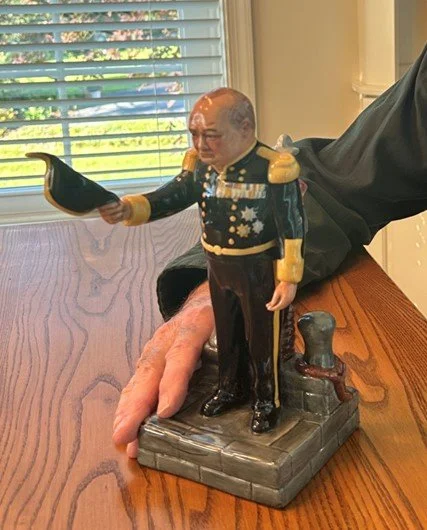
I wrote fairly recently about how much I looked forward to joining Allen Packwood – Director of the Churchill Archives Centre – for a discussion of my book Operation Catapult at Churchill College at Cambridge University. My late-September visit turned out to be uplifting in even more ways than I had expected. For instance, I finally got to meet a number of longtime “email friends” in person. One remarkable friend, Derek Greenwell, took the train from London to Cambridge – on his 24th wedding anniversary no less –and happened to be one of the first people I saw. After a handshake and a hug, Derek surprised me by saying “I have something for you,” reached into his valise, and handed me a carefully-bubble-wrapped package. I unwrapped it to reveal this tribute to “The Life and Times of Winston Churchill, Lord Warden of The Cinque Ports,” which instantly became the coolest thing I own, and then became even more special after what followed.

This was an hour before the scheduled discussion of my book. Derek, Allen Packwood, and I naturally agreed that Sir Winston would have a place of honor on the table between Allen and me during our conversation. As we turned a corner, I heard a clink. Typically clumsy, I accidentally bumped the doorframe with Sir Winston’s extended right hand, clipping off that hand and the bicorn hat it held. I scooped up his hat and hand, stashed Sir Winston away, made a full confession to Derek, and later packed him with nervous care for the next day’s flight home to the U.S. My wife Barbara later performed successful reattachment surgery on the wounded Lord Warden.
Despite that inauspicious beginning, the evening was dazzling. I hoped there would be at least ten people in the audience. There were about thirty-five, including a number of Cambridge fellows and several historians whose books I have enjoyed reading. To say I was even more honored than thrilled is an understatement. As grateful as I was to Allen Packwood for inviting me to Cambridge, I was even more grateful for his incredibly thoughtful questions that helped me share the story of the Royal Navy’s attack on the French Navy at Mers-el-Kébir.
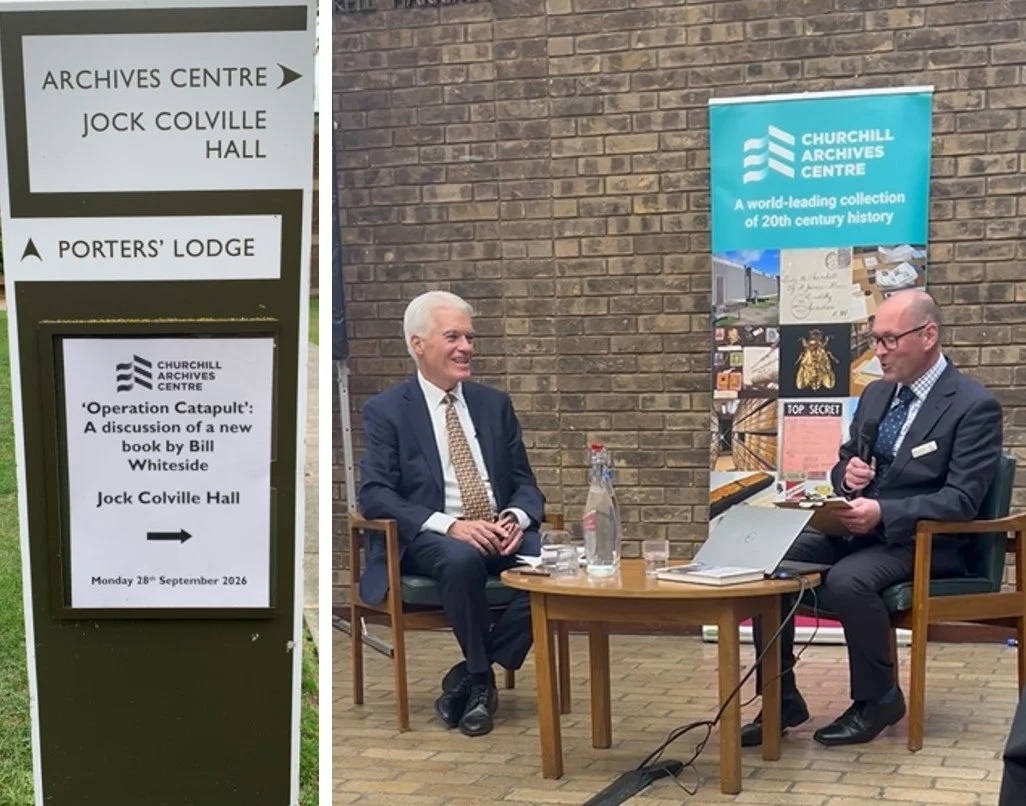
The additional questions from the audience were thought-provoking as well. One from Piers Brendon – Allen’s predecessor as Director of the Churchill Archives – stumped me. (He was still kind enough to sign my copy of his majestic book The Dark Valley, which I am currently reading and absolutely love). I also enjoyed meeting James Lapham, Ryan Thompson, and Roy Charles - some additional used-to-be-just-email-friends.
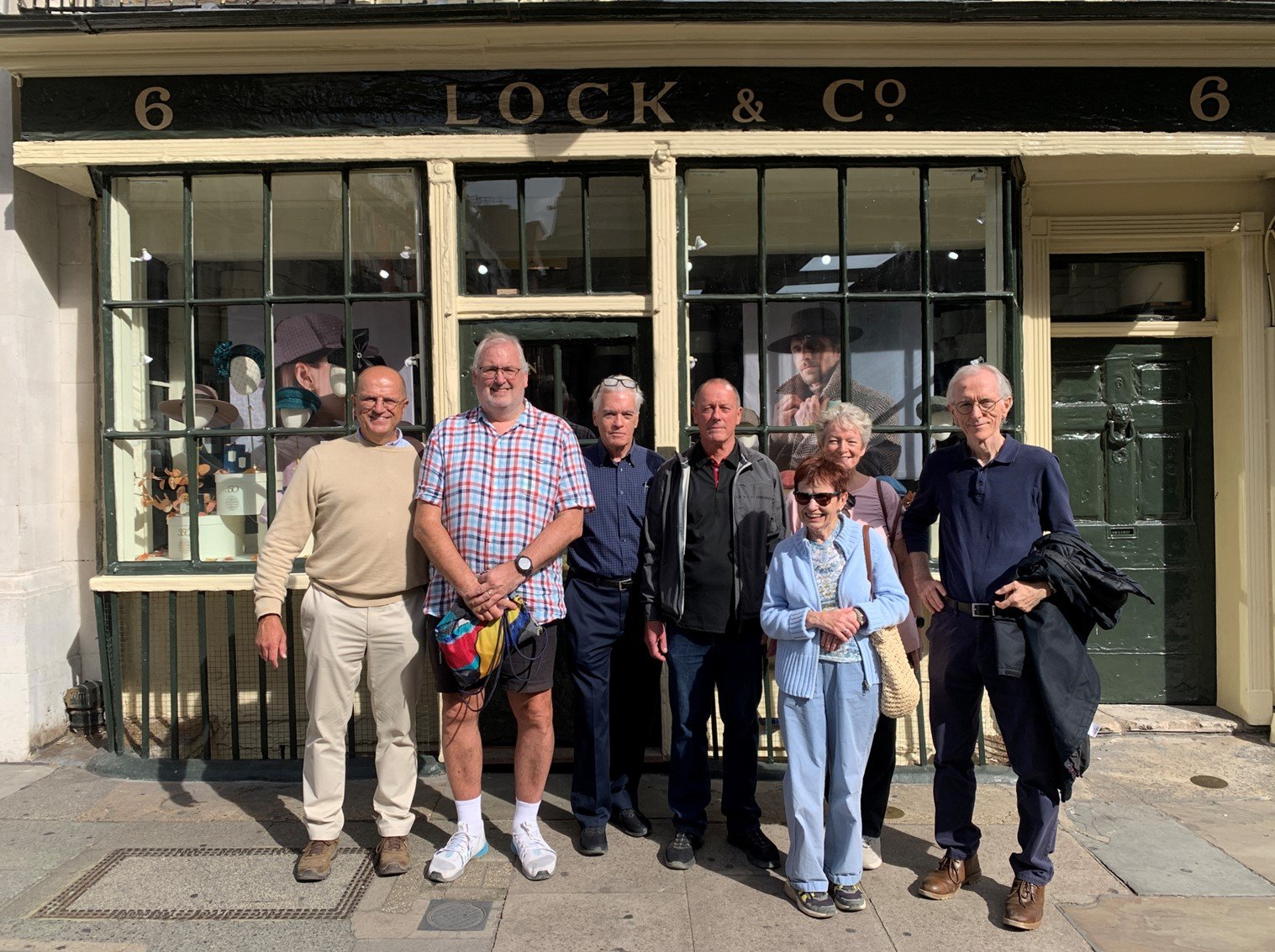
When Barbara and I started planning our trip to London and Cambridge, I thought we might make a return trip to Chartwell, Churchill’s country home. Instead, Ludwig Ray, another email friend, who volunteers at Chartwell, invited me to join a wonderful group of his fellow Chartwell volunteers for a Churchill-centered walking tour of London. Our walk included visits to St. Margaret’s Church (where Winston and Clementine were married), his old office in the Ministry of Defence (where the building is now a Raffles Hotel and Sir Winston’s former office is a £20,000 per night suite), and a stop at 350-year-old Lock & Co. (from whom Churchill bought his signature hats).
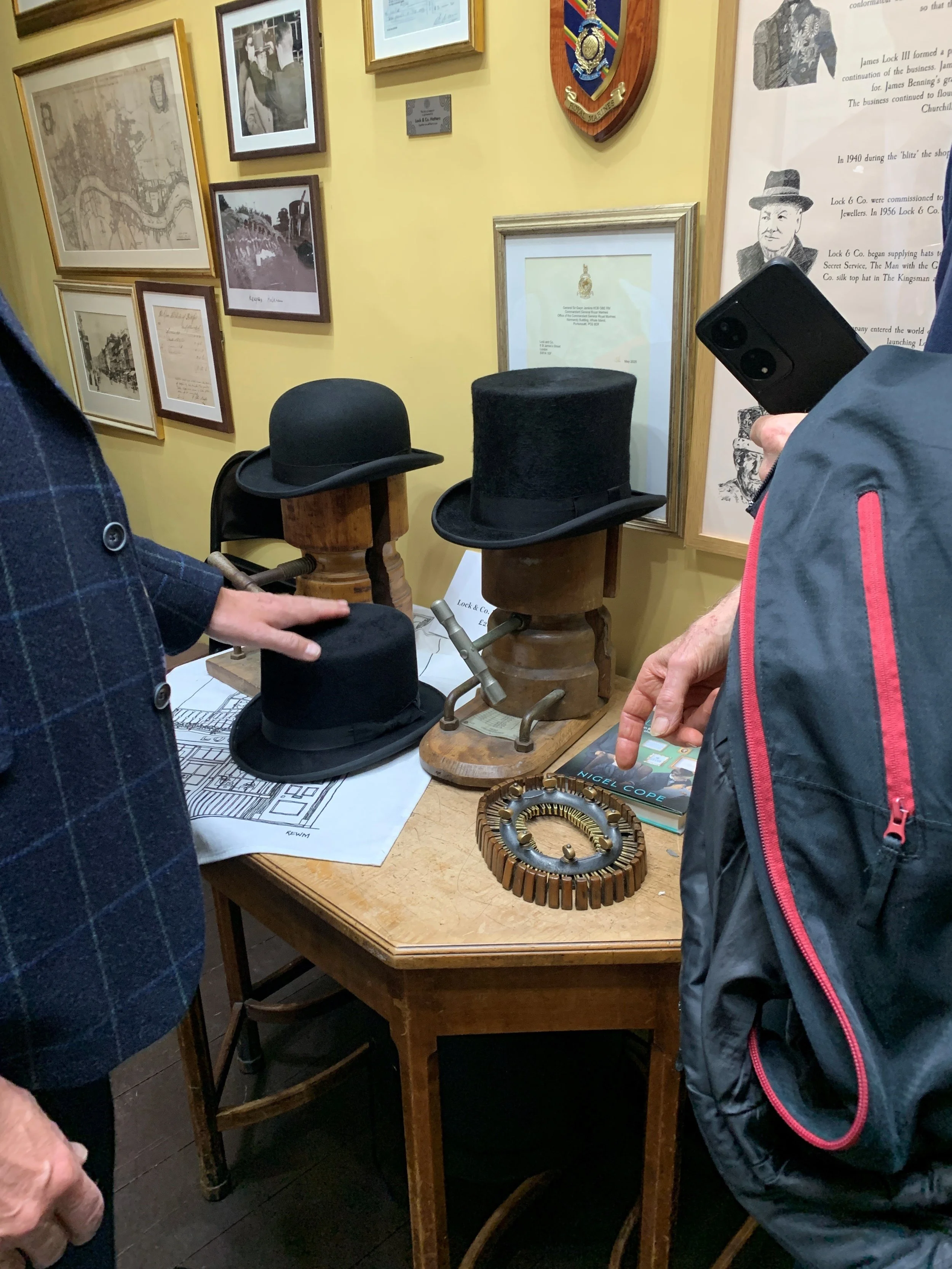
Ludwig had promised a magical mystery tour, and our excursion truly lived up to that promise. The most incredible part of our experience was the opportunity to witness the magical impact of Winston Churchill on everyone we encountered. The verger at the church, the concierge at the hotel, and the proprietor of the hat shop all lit up with spontaneous enthusiasm upon learning their visitors had an attachment to Winston Churchill and to Chartwell specifically. They each regaled us with unique stories that added incredible color to our tour. There might be some truth to the rumor that I joined several of my fellow thirsty walkers for a couple of pints to top off a phenomenal day with the best company an American visitor could be privileged to enjoy.
Another highlight was meeting Christopher Somerville at Cambridge. If you have been following me for more than thirty seconds, you have seen me write multiple times about Christopher, the grandson of Admiral Sir James Somerville whose story is at the core of my book. I first contacted Christopher back in 2012 when I needed his permission to review a restricted folder of his grandfather’s papers in the Churchill Archives. Of course, he immediately granted that permission, and we have kept in touch.
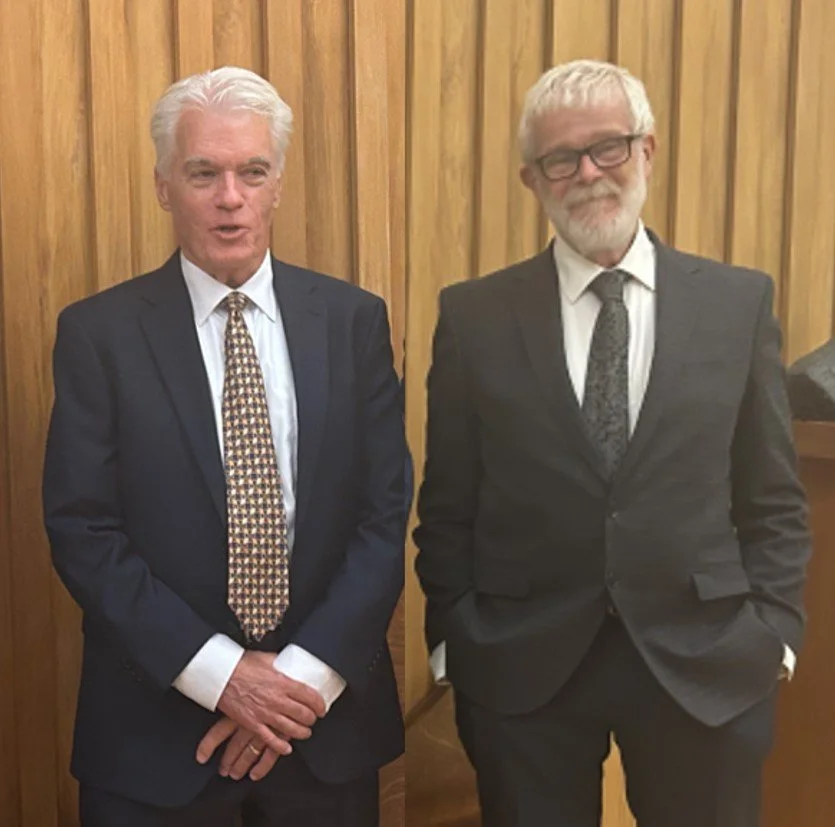
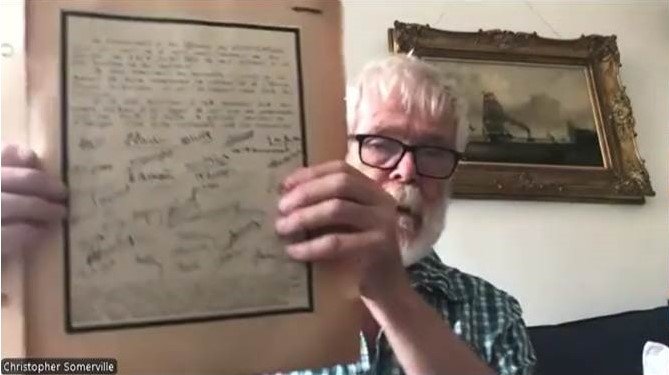
When I hosted a Zoom conversation with Christopher this past July, he enriched the proceedings by sharing some artifacts from Admiral Somerville’s life and career, including several pages from his old scrapbooks. Christopher brought a couple of those scrapbooks with him to Cambridge, one of which contained a searing letter from the surviving officers of the Dunkerque, one of the French ships attacked at Mers-el-Kébir. (The scrapbooks also contained private letters, unique photographs, original poems, and formerly classified reports). Much to Allen Packwood’s delight, Christopher donated those scrapbooks to the Archives on the spot, an act of incredible generosity.
I do not really believe in the butterfly effect. (“Does the flap of a butterfly’s wings in Brazil set off a tornado in Texas”)? But it’s nice to think that when I first flapped my wings almost fifteen years ago and contacted Christopher for permission to view his grandfather’s folder, that touched off a faint breeze that eventually helped bring about this latest contribution to the wondrous Churchill Archives.
And that would be perfect since although I might one day have a more meaningful and memorable experience as an author than what you’ve read about here, there is a very real chance that I might not.
Thanks for reading,
Bill